CASE STUDY
VLR Token Distribution Platform
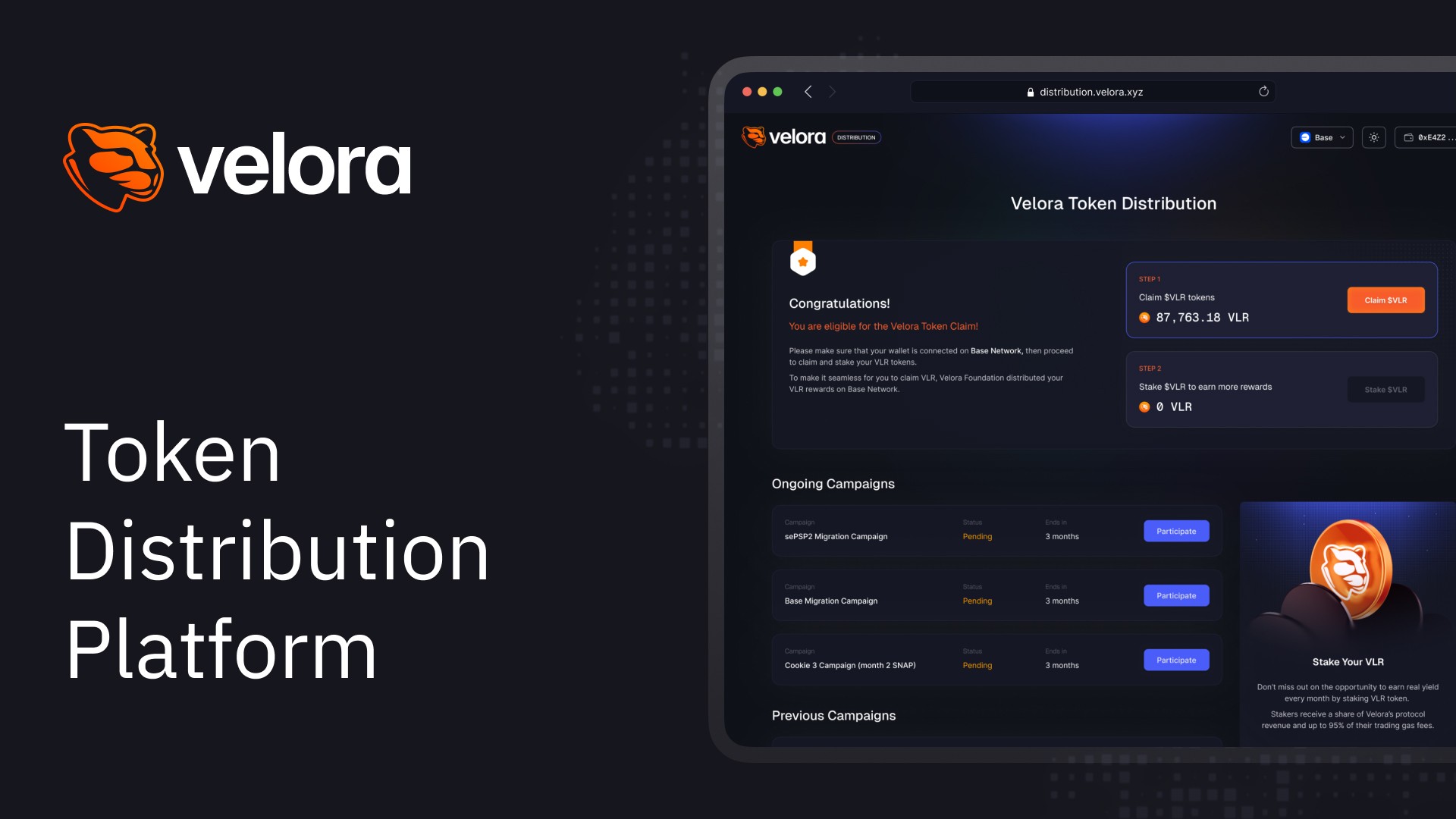
Successful TGE
Designed and built a token distribution platform for Velora's TGE
- TIMELINE
- Sep 2025
- COMPANY
- Velora
- INDUSTRY
- Decentralized Finance
- MY ROLE
- Head of Design
Strategic mission
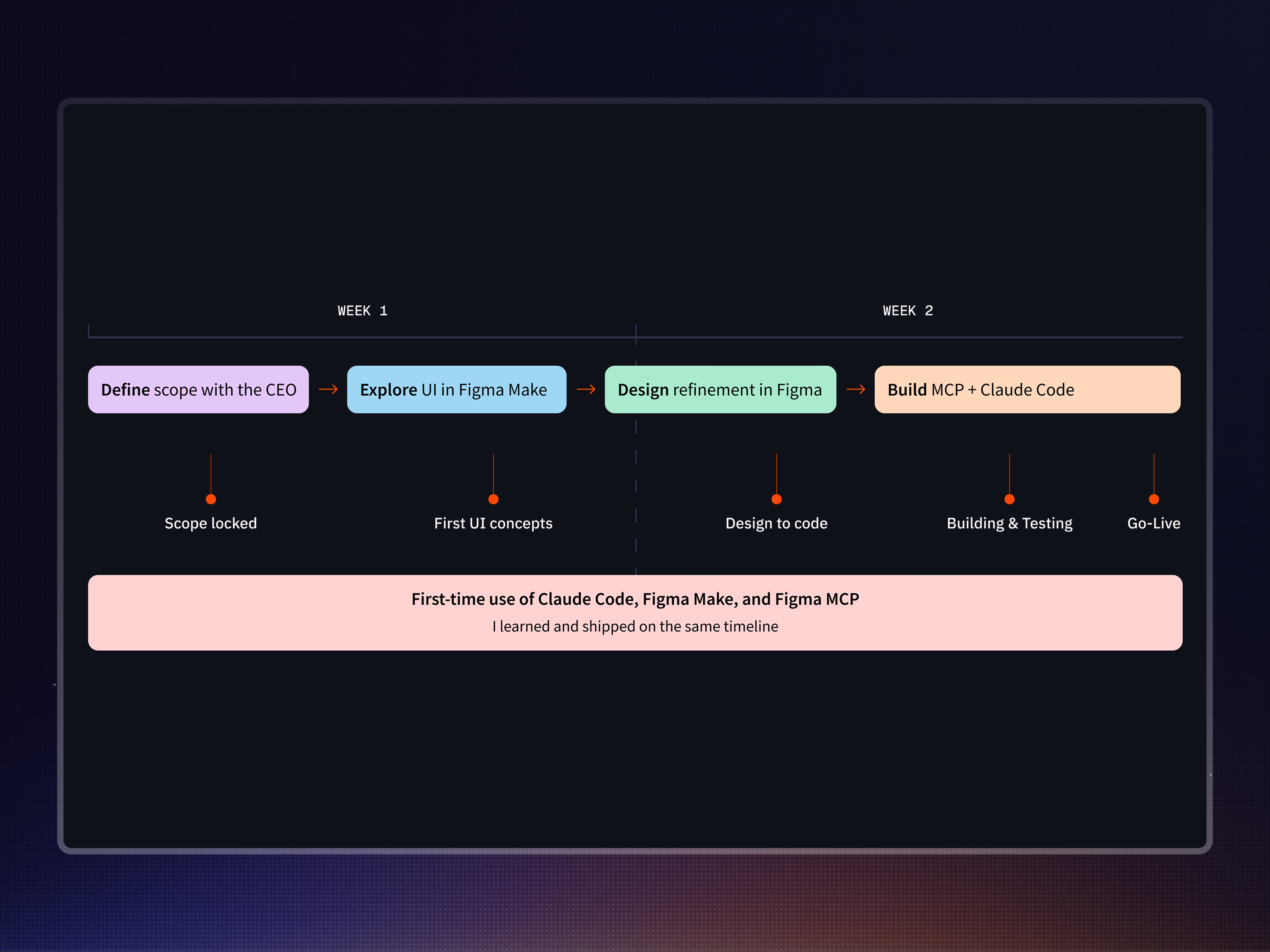
Leading the end-to-end design and development of Velora’s TGE platform, enabling community participants to successfully claim and stake +100M $VLR token rewards. I owned the full loop from scope to production code, learning the AI-assisted build stack as I shipped it. Zero to live in 14 days.
- +100M
- VLR Tokens Claimed
- 14 Days
- Project Completion Period
- 0
- Delays in TGE
The Project
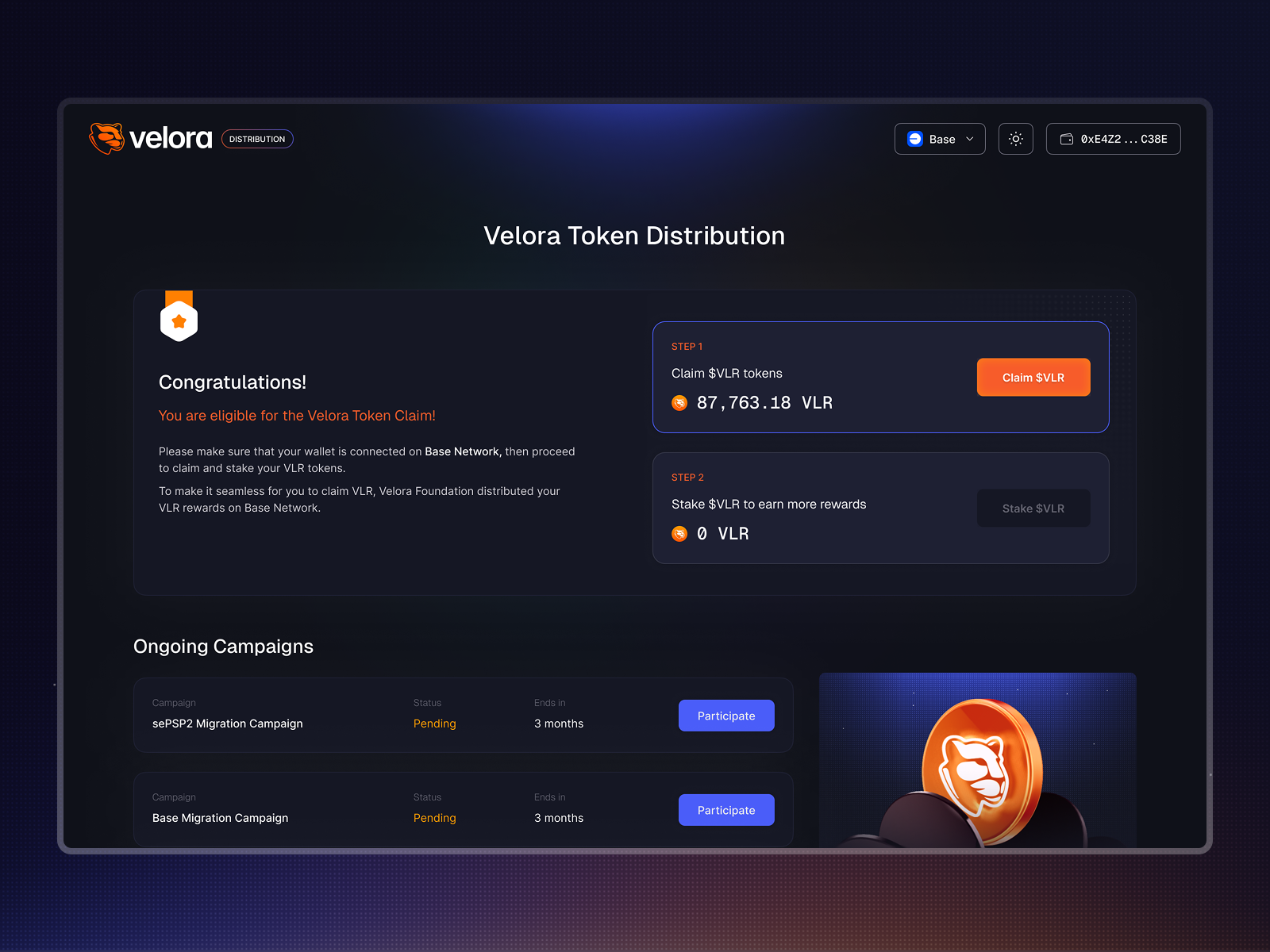
A production-grade token distribution platform, designed and shipped in 2 weeks, by a designer:
Tools
Figma, Figma Make, Claude Code, Git, React, Wagmi
The Context
ParaSwap became Velora, PSP token became vLR token
ParaSwap launched in 2020 as one of DeFi's earliest DEX aggregators, routing trades across liquidity sources to deliver the best rates on-chain. Over four years it grew to 5M users and $140B in cumulative trading volume, establishing itself as core infrastructure for the Ethereum ecosystem.
But aggregation had a ceiling. Project Miro was the answer: a strategic pivot from swap routing to intent-powered, cross-chain trading.
This is the kind of trading experience that matches the flexibility of centralized finance, without sacrificing decentralization. ParaSwap became Velora. $PSP migrated to $VLR. A new token allocation, new staking mechanics, and community rewards marked the start of a new chapter for the DAO.
When TGE arrived, ~100M $VLR tokens needed to reach eligible participants across five campaigns: Road to Velora, Bankless, Cookie3, and Early Migration campaigns. No distribution tool existed. Engineering was heads-down on the core protocol.
The Challenge
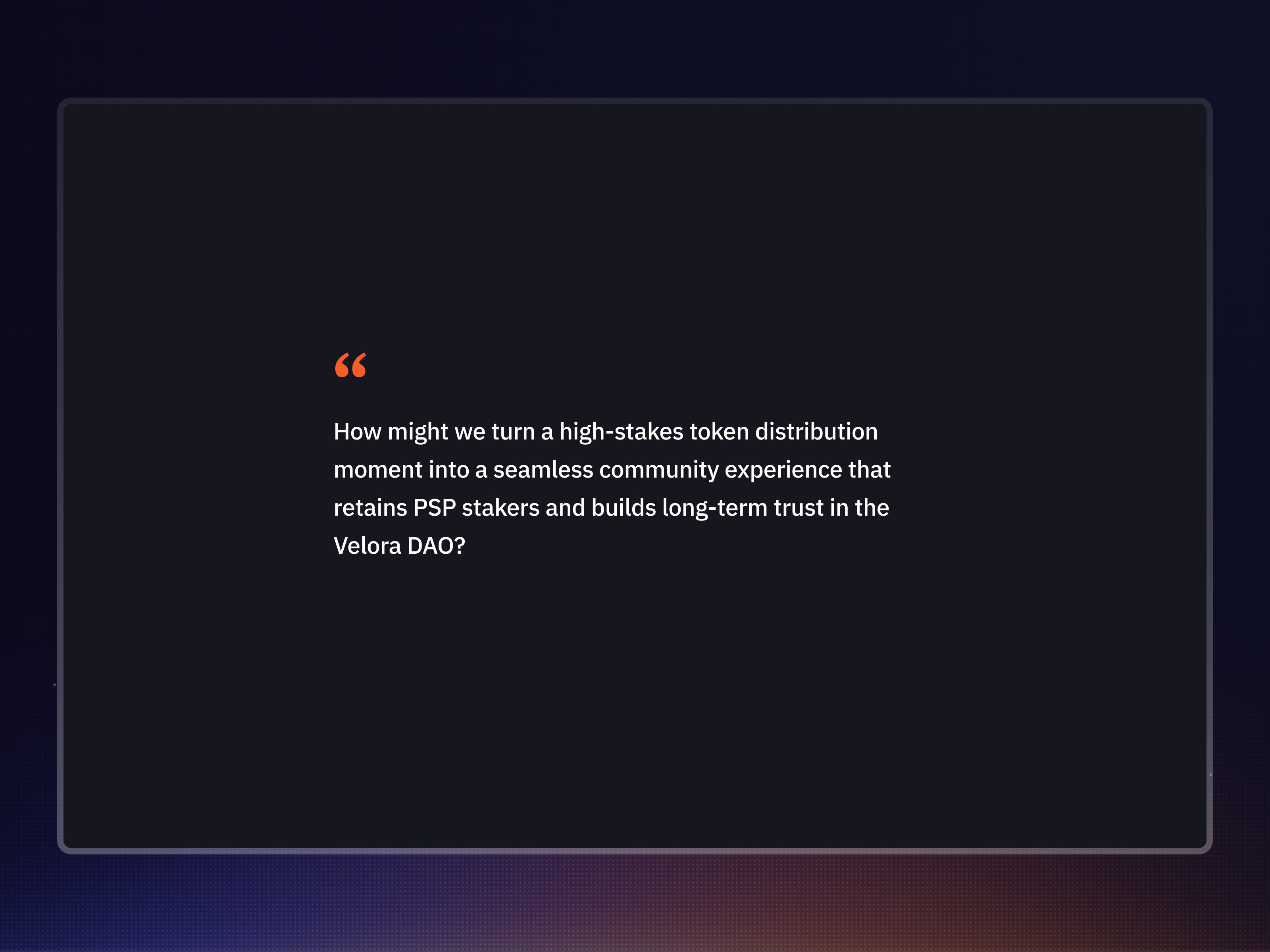
A Major protocol milestone, no tool is fit to deliver it
Third-party distribution platforms existed, but none fit: too expensive, too slow to configure, too rigid for VLR's campaign structure. The stakes were also higher than pure distribution: ~40M tokens (first distribution phase) entering the market without a staking incentive risked a significant price drop.
The platform had to do both: distribute rewards and guide users toward staking before they could sell.
The window was two weeks. It had to be production-ready, friction-free, and reusable for future campaigns. A poor experience at the DAO's most visible milestone risked losing community trust built over four years.
Tradeoffs
Ship fast, don’t break trust
Four trade-offs shaped every decision on this project. Each one forced a choice between two things that both mattered.
Build vs Buy
Third-party platforms existed but were too expensive, too slow, and too rigid. Building in-house was the only viable path, but engineering was already stretched thin on other priorities.
The trade-off: full control at the cost of time and resources we didn't have.
Flexibility vs Simplicity
The platform had to support multiple campaign types, reward structures, and vesting periods. But every added layer of complexity risked turning a simple claim into a confusing one.
The trade-off: prioritizing clarity over feature completeness
Scope vs Coverage
The initial scope was deliberately narrow: ship something simple that works flawlessly, then expand. no multi-chain support, no gamification, no notifications.
The trade-off: a focused, frictionless core experience over feature-richness.
Reliability vs. Speed
AI-assisted coding was a calculated risk that gave us the ability to hit the deadline, rather than handing off to engineering and risking delays on the protocol's most critical deadline.
The trade-off: prioritizing speed-to-market over a traditional sprint build.
Design Decisions
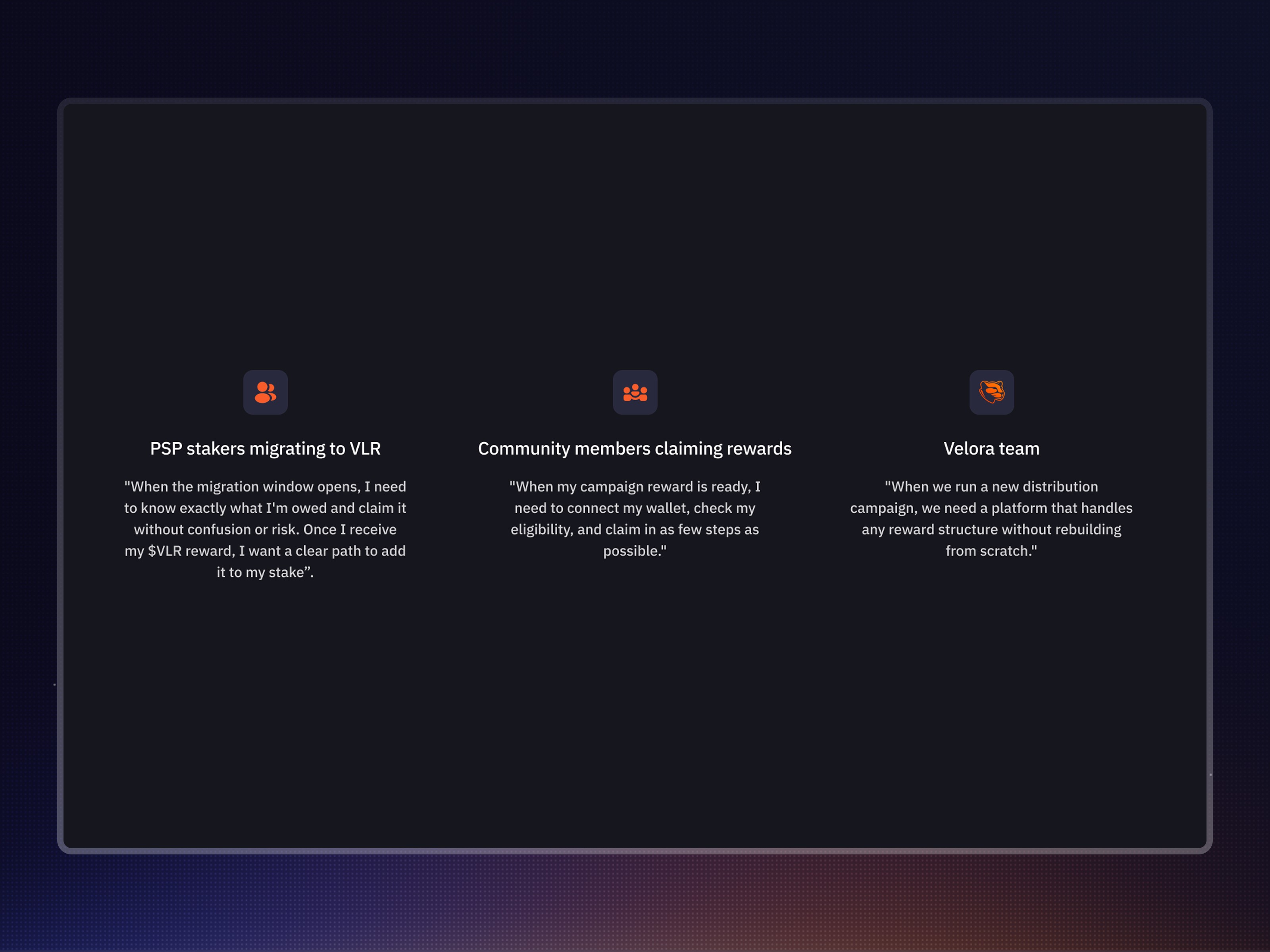
One platform, three jobs-to-be-done
The solution: a self-serve, wallet-connected distribution platform built on Velora’s existing design system, flexible enough to handle various campaign structures, simple enough for any participant to use without guidance.
The Approach
Designer as builder
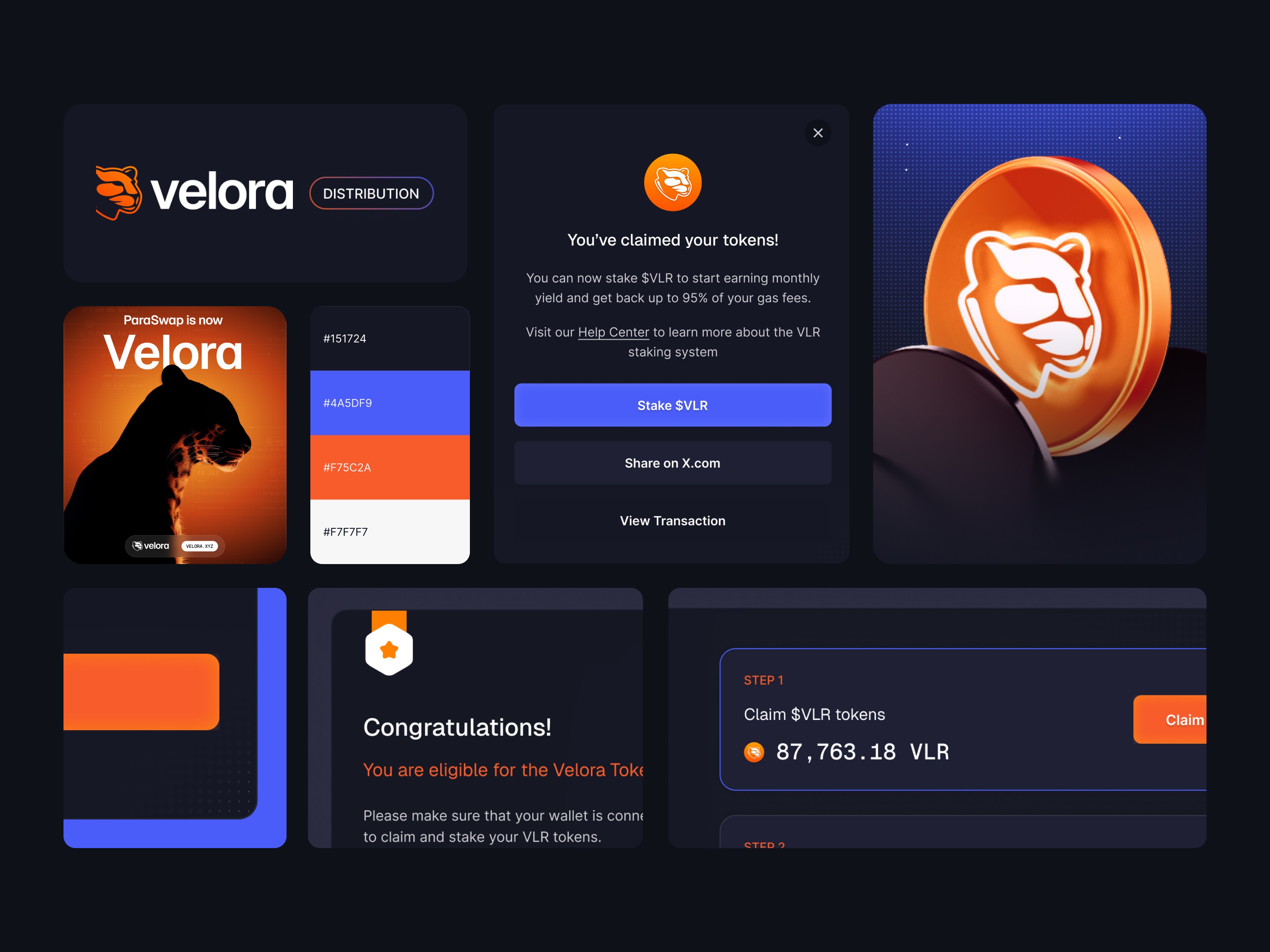
No spec handoff, no sprint queue. I owned the full loop from scope to production code, learning the AI-assisted build stack as I shipped it. Zero to live in 14 days.
I decided to use Velora’s design system to save time, maintain the brand consistency, and capitalize on users’ familiarity with the dApp.
Information Architecture
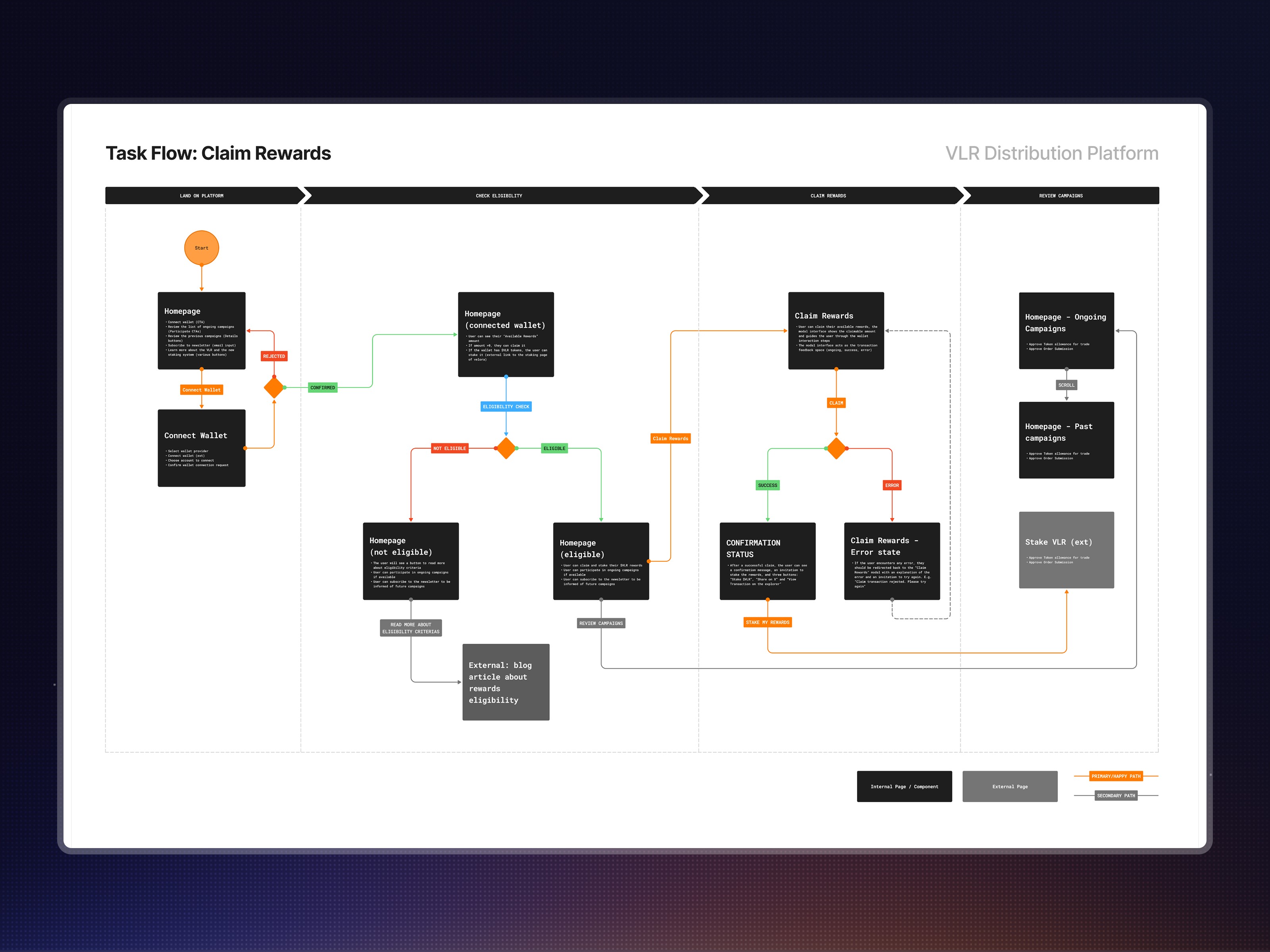
Mapping the claiming experience
Working under a tight deadline, I knew I couldn’t afford to skip information architecture. Taking the time to map out the full scope from the start helped us avoid unnecessary iterations and kept the project moving forward.
I looked closely at other token distribution platforms for inspiration, but stayed focused on building only the features that truly mattered.
The Product
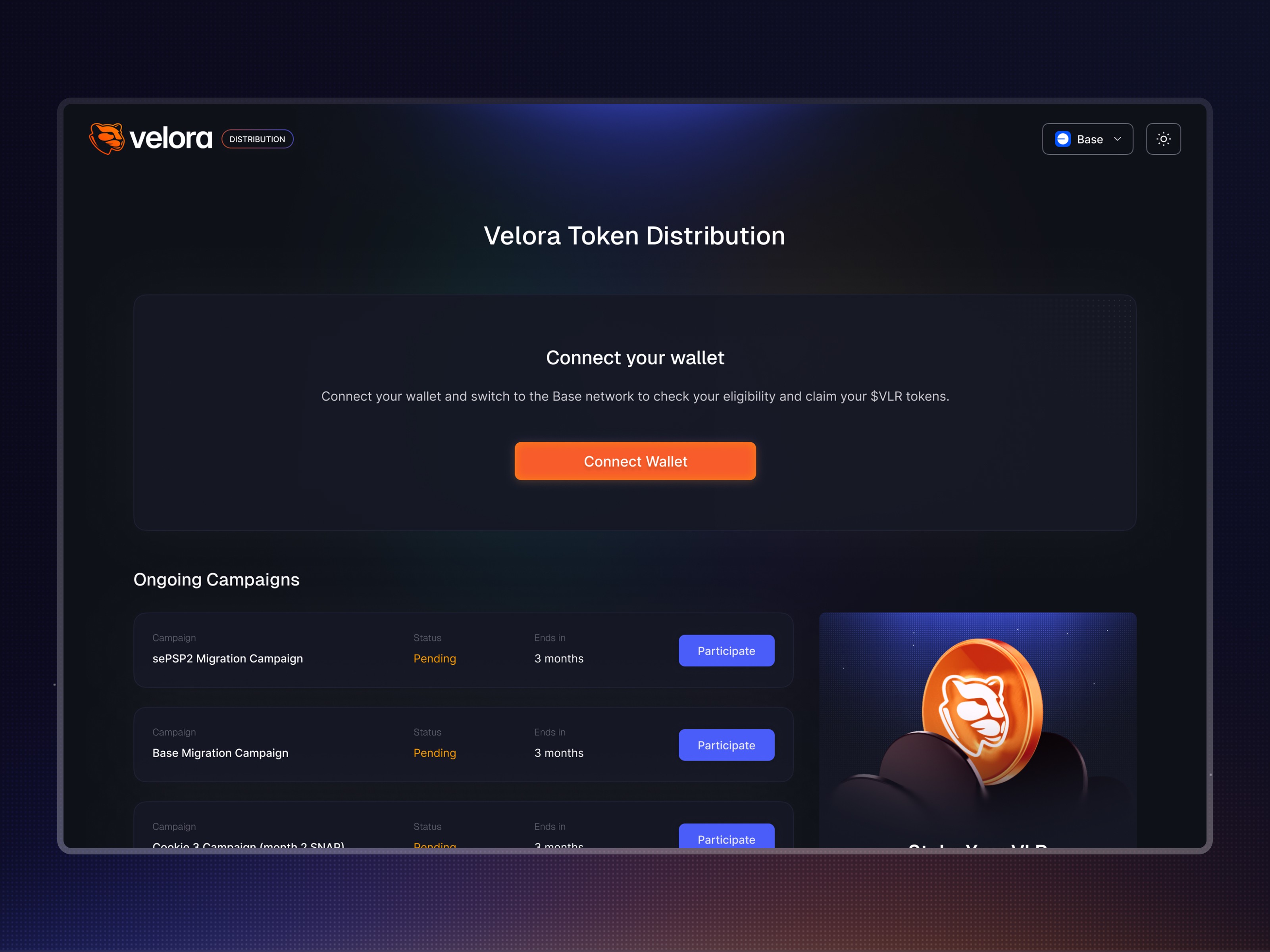
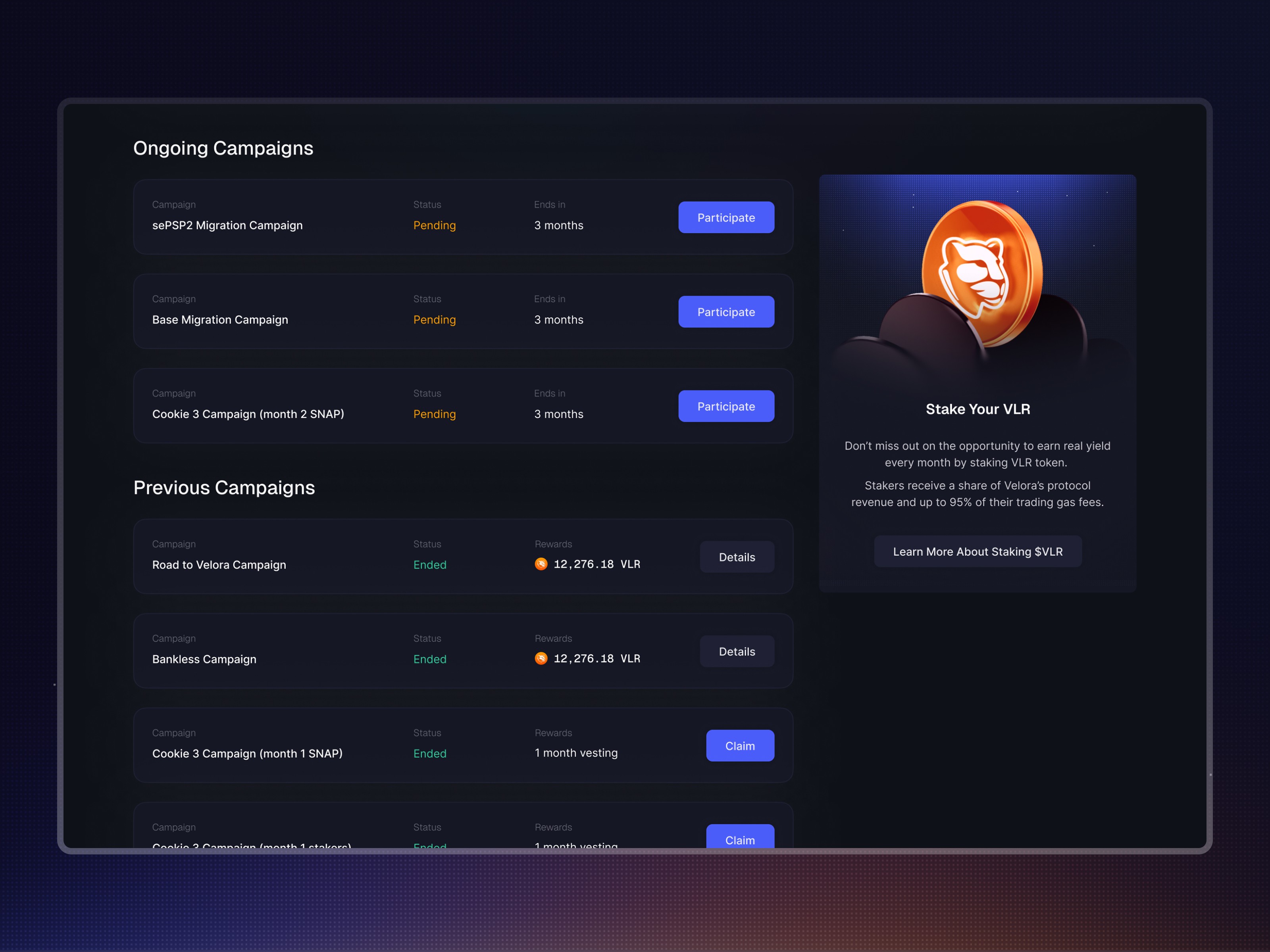
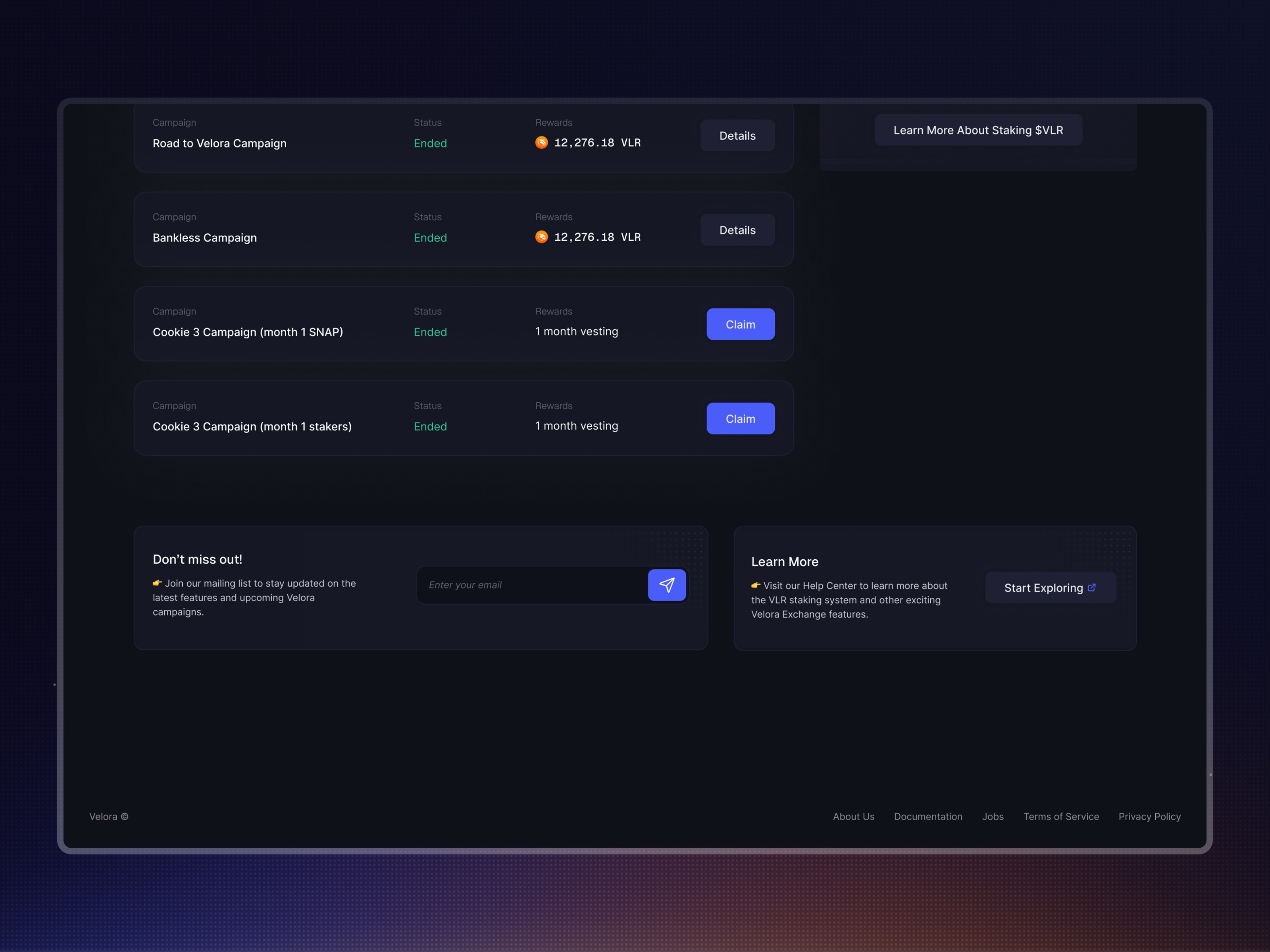
Built In Two Weeks, Used By Thousands
I took on the project alongside my existing responsibilities, I learned to use Claude Code, Figma Make, and Figma MCP from scratch, and I shipped a production-ready platform in two weeks.
Focus
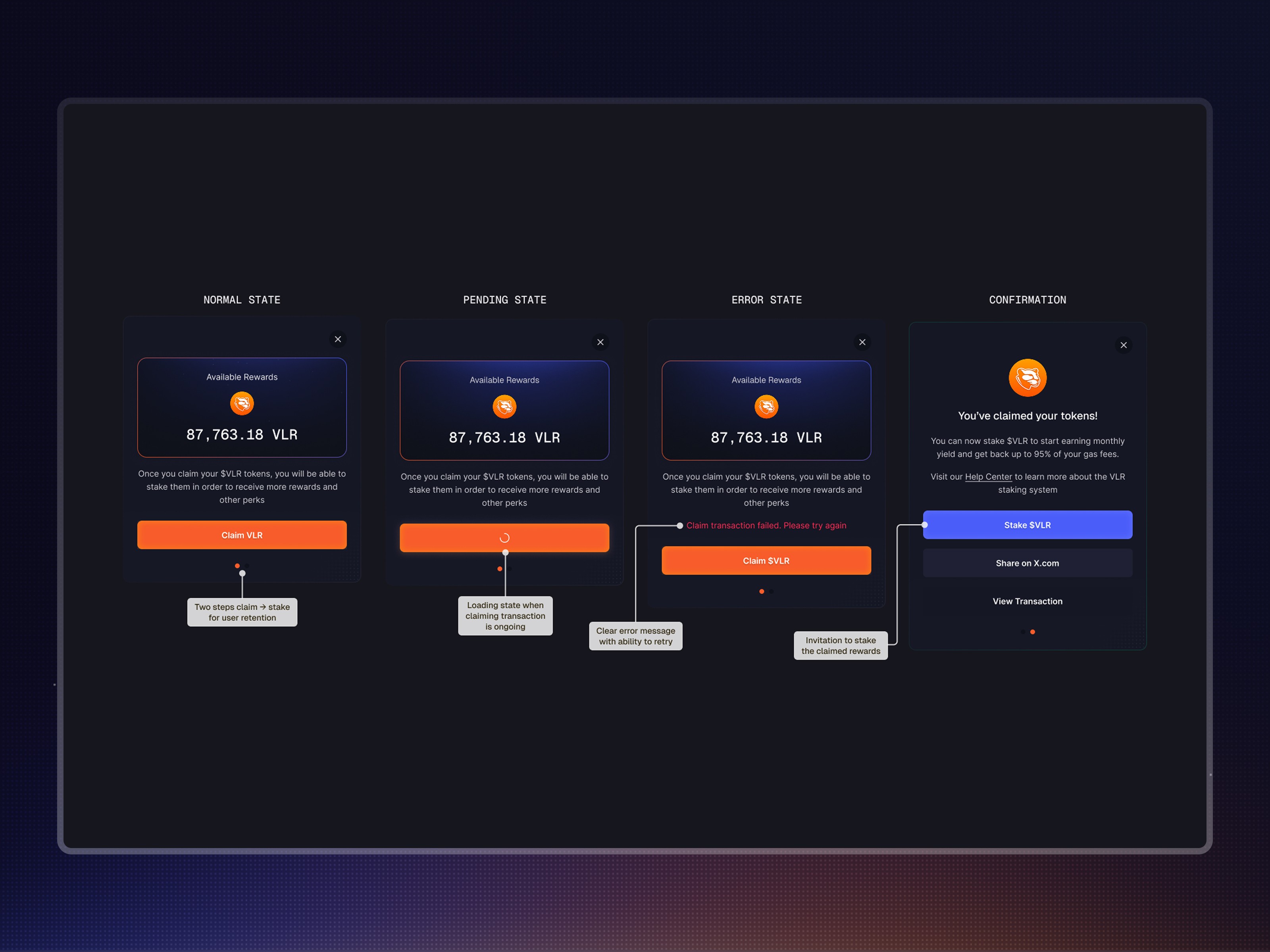
Reward Claiming Modal, Step By Step
The claim flow enabled a low-friction claiming experience, which is broken down into two phases: Claim and Stake.
The claim happens within the modal: the user clicks the Claim button, confirms a wallet request from the smart contract, and waits for the transaction to be mined on the Base network.
The next step is to stake: once the user claims their tokens, they are invited to stake them and earn a share of the protocol’s revenue.
This experience contributed to onboarding new VLR token stakers.
The Impact
A protocol milestone, delivered on time
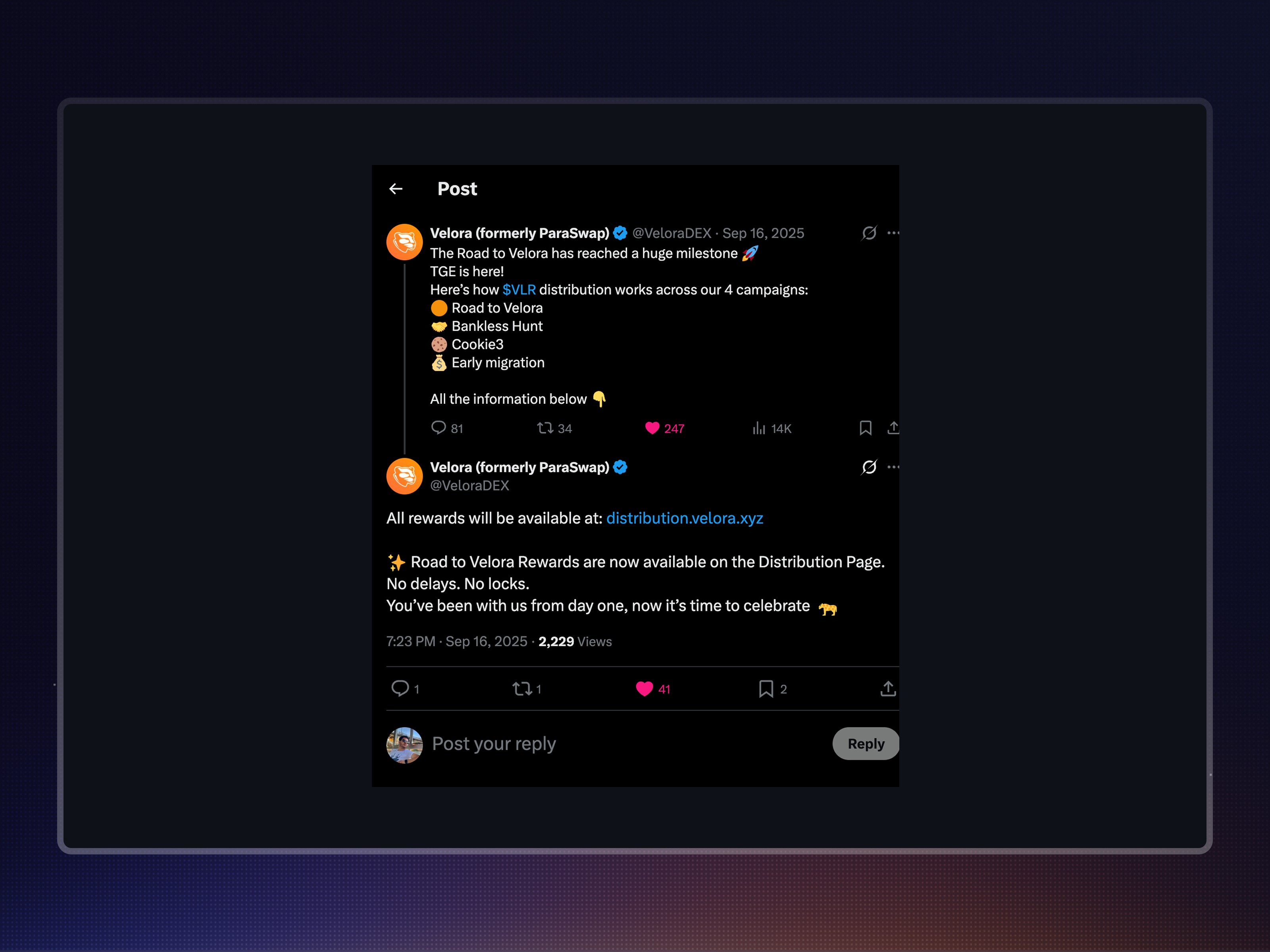
Project Miro transformed ParaSwap into Velora with a new brand, token, and mission. The Distribution Platform played a key role in that transition by rewarding community members and driving early adoption of the VLR staking system. It supported the distribution of ~100M $VLR tokens across multiple marketing campaigns, and the TGE was executed on schedule with no delays.
The claim-to-stake flow reduced immediate sell pressure by guiding users directly into staking rather than selling. The platform was later reused for post-TGE campaigns, proving its longevity beyond launch day. It was designed, built, and shipped by one designer in two weeks with nearly zero engineering resources.
Leadership Perspective
When The Moment Call, You Ship
Project Miro was the most ambitious initiative in Velora's history. The rebrand, the token migration, the protocol pivot, every piece had to land at once. The Distribution Platform was a critical part of that puzzle, and it had no owner.
I took it on alongside my existing responsibilities, I learned to use Claude Code, Figma Make, and Figma MCP from scratch, and I shipped a production-ready platform in two weeks.
At a leadership level, this meant:
- Identifying an unowned critical deliverable and taking accountability for it
- Learning an entirely new AI-assisted build stack under real deadline pressure
- Shipping without engineering dependencies at the most sensitive moment in the protocol's history
At a strategic level, it confirmed that AI doesn't replace design leadership; it amplifies it. When a design leader can direct that process, the org moves faster, ships sooner, and needs fewer resources.
Other Case Studies
View More Work
Ready to collaborate?
Let's discuss how we can build something impactful together.
Get in touch